
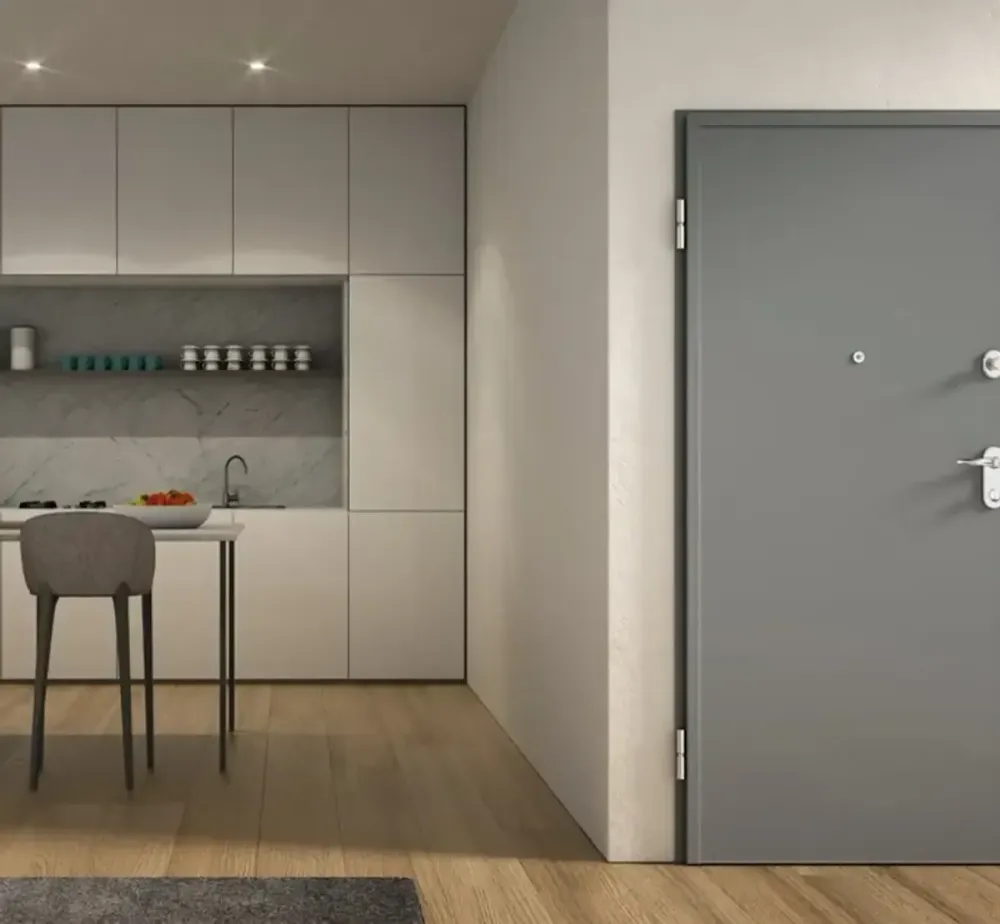
Security doors — Dierre
A leading European manufacturer of security and fire doors. Its range covers certified classes RC2–RC4 and fire resistance EI30–EI90, for residential and commercial buildings.
Security doors protect the entrance to a flat or house against burglary. They come in classes RC2, RC3 and RC4 under the EN 1627 standard, with a steel structure and a cladding of your choice. The class applies to the whole door assembly, not just the leaf.
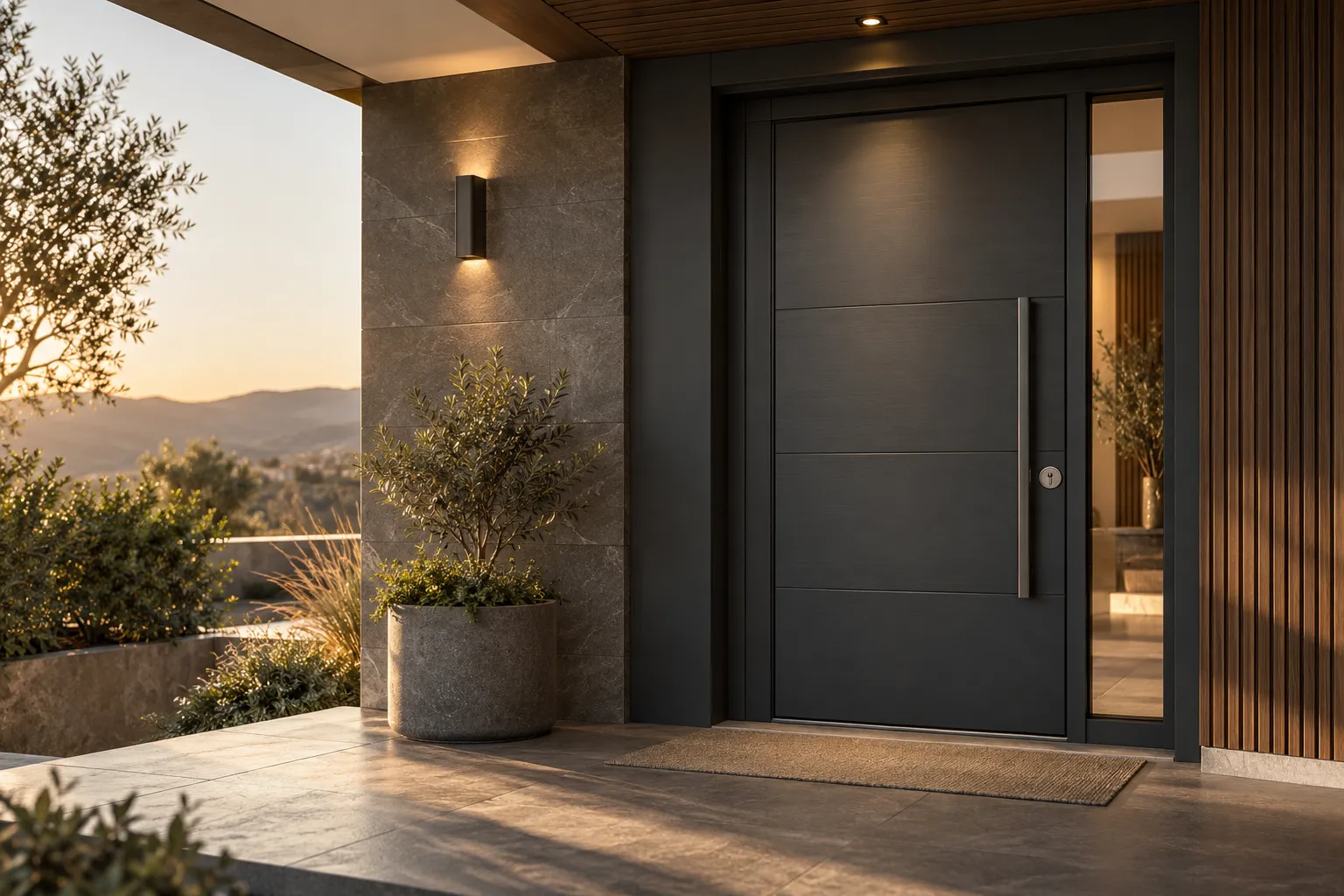
With a security door you decide on four things: the class, the installation, the lock and the look. The class sets the level of protection; the look has no effect on the certificate.
The class tells you how long the door resists a break-in: RC2 about 3 minutes, RC3 about 5 minutes, RC4 about 10 minutes. For most flats and houses we recommend RC3.
The class applies to the whole assembly: leaf, frame, seals and hardware. That is why we install a complete new certified set, not just the leaf. We check the opening and the condition of the wall at the measurement visit.
The lock is part of the certified assembly. We fit only parts approved by the door manufacturer. A non-approved cylinder voids the certificate and the warranty.
The cladding sets the look of the door on both sides. Smooth, veneered and lacquered finishes are available. Transoms and sidelights must have the same class as the leaf.
The measurement visit is free and with no obligation. At the visit we choose the class, check the opening and prepare a price.
Each manufacturer has its own designs, materials and classes — we are happy to advise on what works best for your building.
A leading European manufacturer of security and fire doors. Its range covers certified classes RC2–RC4 and fire resistance EI30–EI90, for residential and commercial buildings.
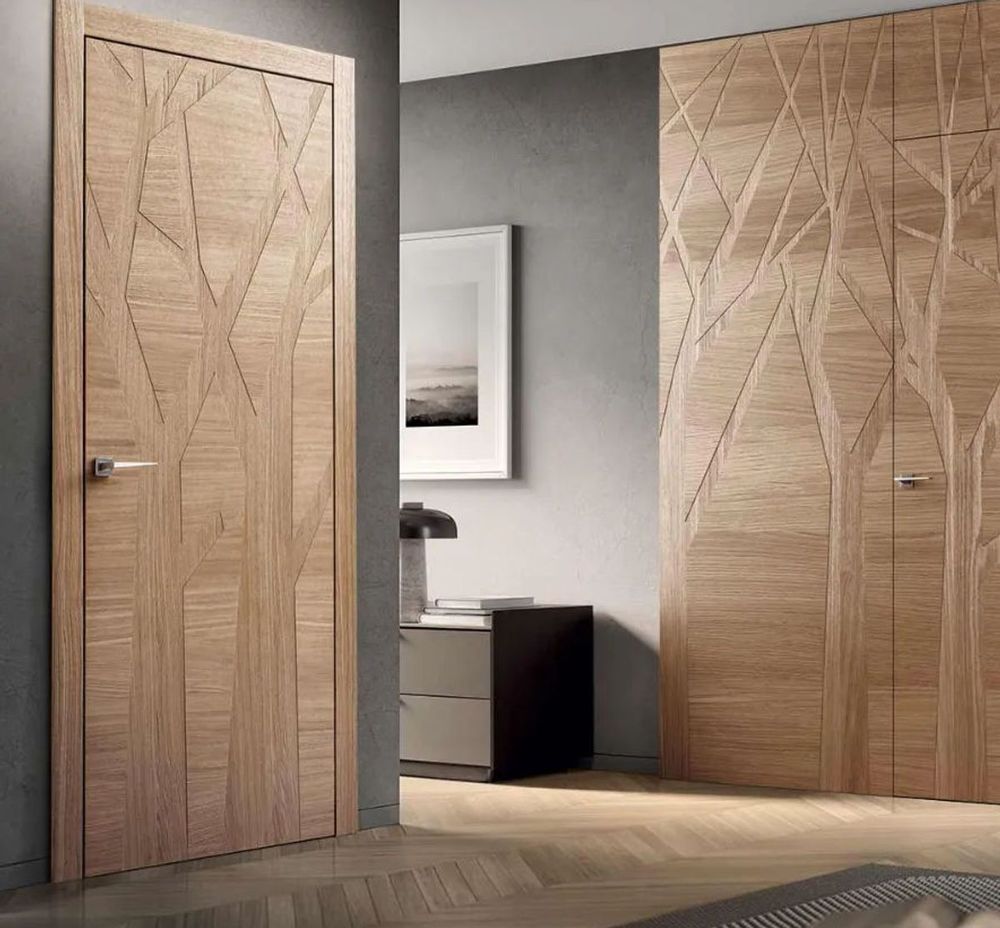
A Spanish manufacturer of solid wood entrance doors. Handcrafted, weather-resistant and available in a wide choice of designs, from classic to contemporary.
What customers ask us before they decide.
The difference is in how long the door holds out and which tools the burglar uses. An RC2 door resists for about 3 minutes against simple tools such as a screwdriver, pliers and a wedge. An RC3 door resists for about 5 minutes, also against a crowbar. For most flats and houses we recommend class RC3.
For a flat in a block with a controlled entrance, class RC2 is often enough. We recommend RC3 when the door can be reached from a public corridor or the flat is on the ground floor. We choose the class together with you at the measurement visit, taking into account the position of the flat, access and the existing opening.
The EN 1627 standard classifies doors, windows and shutters into burglar resistance classes from RC1 to RC6. Each class defines the burglar's tools and the resistance time. Resistance is verified by three tests: a static load test, a dynamic load test and a manual break-in attempt. The class applies to the whole door assembly, not just the leaf.
Replacing the entrance door to a flat usually does not require consent. You do need consent from, or must notify, the building manager when the house rules require a uniform look for doors facing the common corridor. Consent is also needed when the work affects a common part of the building, such as the wall or the existing frame. Check with your building manager before ordering. This is a legal question. The client should review this text before publishing. Do not promise that consent is not needed.
Yes. Security doors have a solid core and several seals around the perimeter. Both reduce noise from the stairwell. The figure depends on the model and the quality of installation. For an exact figure in dB, check the data for the specific model. Get the dB figure for two or three of the main Dierre and Padilla models. Without a number, this answer will not be quoted.
Not automatically. Burglar resistance and fire resistance are separate certificates. A door is fire-resistant only if it carries an EI30, EI60 or EI90 rating. Some models combine both certificates, for example RC3 and EI30. If you need both, tell us before ordering. Please confirm that you really offer a model combining RC and EI. If not, change the last sentence.
Yes, with one limitation. An RC certificate applies to exactly the door configuration that was tested. That is why we fit only locks approved by the door manufacturer. A non-approved lock voids the certificate and the warranty. Please confirm which electronic locks Dierre and Padilla approve. Name at least one specific option.
A transom is a fixed panel above the door leaf. It is needed when the opening is taller than a standard door. Instead of bricking up the opening, we close it with a transom. On a security door, the transom must have the same class as the leaf. Otherwise it becomes the weakest point of the entrance.
Yes. Replacing the cylinder is our most common service job. We also do it on doors you did not buy from us. We fit a cylinder with proper protection against drilling and snapping. A lower-quality cylinder reduces the real security of the door, even if the leaf stays the same.
Dierre is an Italian manufacturer, Padilla a Spanish one. Both offer security doors in classes RC2 to RC4. They differ in cladding options, colour ranges and price. We choose the right brand after the measurement visit, based on the class, the size and the look you want. This answer is general for now. Add three concrete differences, such as the range of classes, the main strength of each brand and the price bracket. This question carries a lot of weight in brand searches.
At the measurement visit we tell you whether the new door fits the existing frame, how long installation takes and what it costs. The visit is free and with no obligation.